How Do You Know if Shocks Are Bad
How to Tell If Your Shocks or Struts Are Bad
It'due south difficult to know just when it's fourth dimension to replace shocks and struts. For one, they go bad slowly, so the reduced ride comfort and road command you're getting don't seem out of the ordinary.
Also, in that location's no ready time or mileage for when aging shocks or struts are due for replacement. You won't notice a set service interval in your owner's manual.
Third, these parts can be hard to get at, and seeing precisely how worn they are requires expensive disassembly. That'due south just not practical or cost-constructive.
Bad shocks and struts are diagnosed through other methods. Here'south what to look for as telltales:
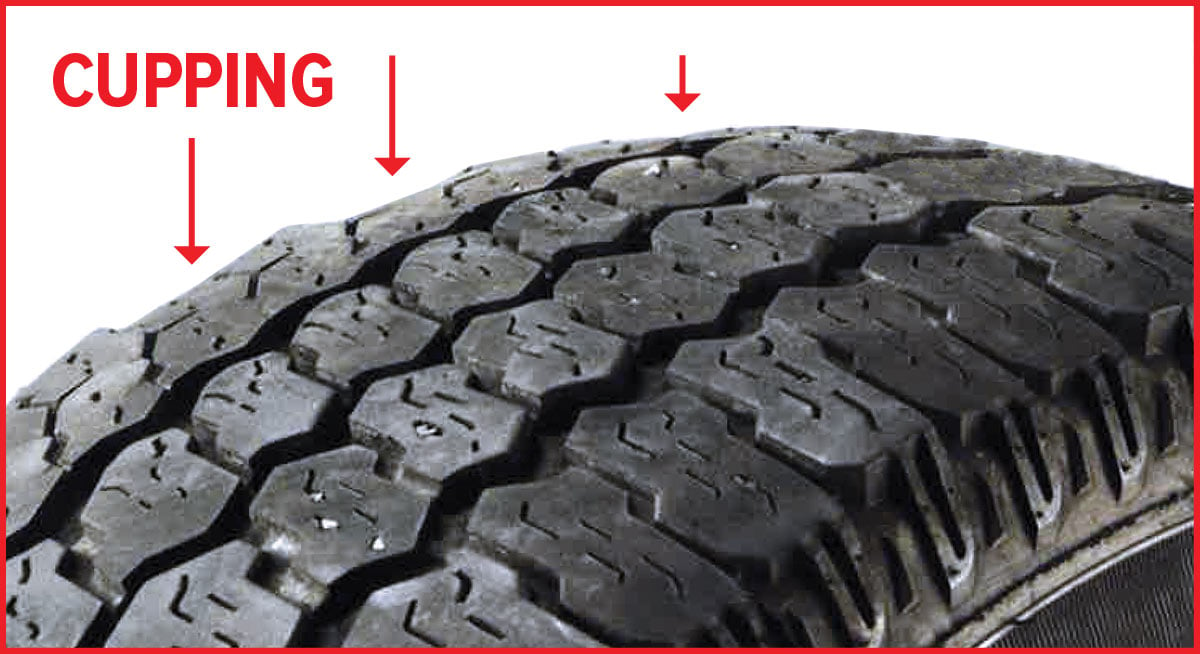
- Cupping on tires, especially if a rotation was performed on schedule but abnormal wear is nevertheless occurring.
- Suspension bushings issues — cracking, peeling, off-center.
- Active leaking of oil on parts.
- A rougher ride.
- Bottoming out (your vehicle's body or suspension hitting the ground) when going upwards a parking garage ramp or backing out of a driveway.
- Longer stopping altitude.
- Swaying after a turn or lane change or in cantankerous winds.
- Noticeable bounciness (more than one or ii bounces) after going over dips or bumps.
- Nose-diving when yous apply the brakes.
What Do Shocks & Struts Exercise?
Shocks and struts in good condition assistance your car handle whatever comes at you lot on the road — bumps, debris, sudden stops, swerving, potholes, current of air gusts or sharp turns. They command the side-to-side, front-to-back and up-and-downwards shifts of the auto'southward weight and maintain optimal tire contact with the road.
Shocks or struts are hard-working parts. They can go through 75 million cycles over the course of 50,000 miles. Fifty-fifty on well-paved roads, they can move upwardly or downwardly one,500 to 1,900 times every mile. They are partners with the brakes, steering, suspension, tires and electronic safety systems — anti-lock brakes, stability control and crash avoidance systems — in keeping a vehicle traveling safely on the road. They:
- Maintain tires' good contact with the road by preventing them from moving upwards and down as well much.
- Contribute to stability as you advance, end and plow.
- Add to ride comfort by absorbing jolts and bumpiness from irregular road surfaces.
- Control a vehicle'southward trunk motion (side-to-side roll, bouncing).
- Help the tread article of clothing evenly for longer tire life.
They don't aid back up the vehicle's weight or any loads, contrary to what many think. The springs exercise that. Simply having worn-out shocks or struts creates more work for the springs equally well as other important suspension parts. Without the control that a skilful shock or strut provides, these other parts go overworked, causing fatigue and premature wear.
Shocks and Struts Aren't Only About a Smooth Ride
Today's vehicles have highly engineered electronic safety systems: vehicle stability systems, ABS (anti-lock brakes), traction control, collision prevention command and automated braking. These all work together to keep tires in proper contact with the road and provide the about stability.
When you have an unexpected difficult terminate or swerve, your vehicle's crash abstention systems send instant electronic signals to the brakes and other critical components. If ride command parts similar shocks and struts are worn, they may non properly respond.
Then the crash prevention systems can't part as designed and yous take less control behind the bike. Stopping distance increases and brakes and tires wear more than rapidly. There'south added strain on the springs, which accept much more upwardly-and-down and side-to-side activity to control.
How Long Exercise They Final?
Information technology all depends on the amount of wear and tear they get, and that depends on the quality of roads yous drive, if you haul loads and how aggressive you are behind the bike. That's why periodic inspections are important.
Have a technician check every 12,000 miles, if you go an alignment, when you get new tires, at least once a year and whenever yous notice the symptoms above. (Les Schwab Tires typically does visual inspections each time tires get rotated and during pre-trip rubber checks.)
You lot may non detect your ride command has been compromised when these parts are wearing out, considering it happens gradually. But daze absorber or strut failures aren't merely bad for comfort. Replacing them when it'due south fourth dimension keeps your motorcar'south electronic systems and suspension working every bit they should, extending your vehicle's life — and keeping you safer on the route.
Schedule an Appointment
Source: https://www.lesschwab.com/article/how-to-tell-if-your-shocks-or-struts-are-bad.html
0 Response to "How Do You Know if Shocks Are Bad"
Post a Comment